/ Pile Methods & Equipment

Soil report first. Rig selection second.

Four pile types, six rig classes, one crew that reads the subsurface before committing to a method. Every project starts with your geotechnical data, not our equipment availability.
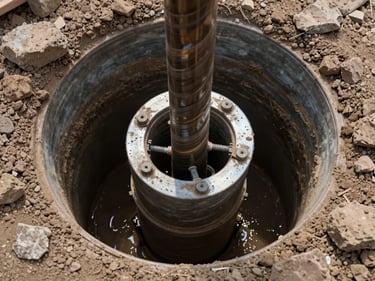
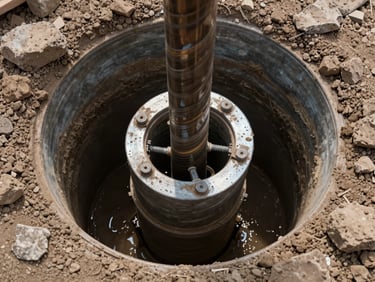
Close overhead shot of a rotary auger drill string entering a bored pile collar, steel casing visible at the bore edge, wet clay spoil around the rim, natural daylight on an active jobsite
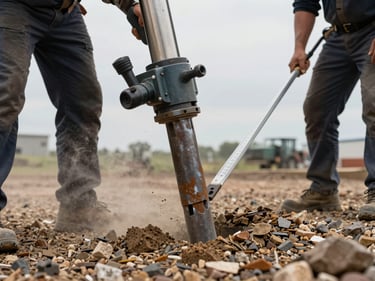
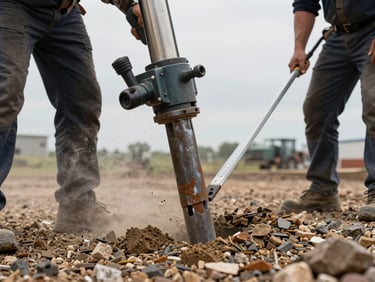
Tight side-angle shot of a hydraulic impact hammer driving a steel H-pile into granular fill, crew member monitoring set rate with a measuring rod, dust and vibration visible, overcast daylight
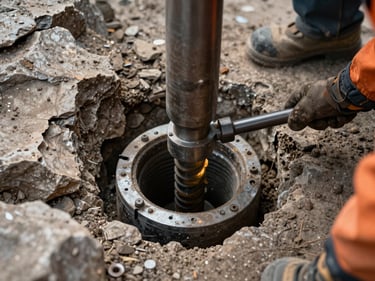
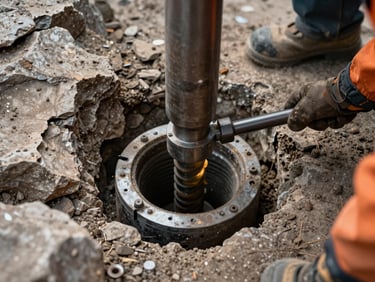
Close-up of a micropile drill head at the collar of a small-diameter bore in fractured bedrock, grout return visible around the casing, crew hand steadying the rod, tight framing on equipment and rock face
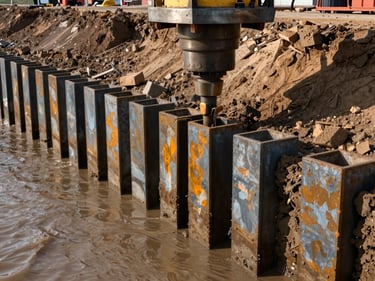
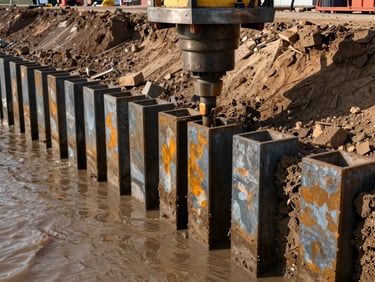
Wide angle shot of interlocking steel sheet piles being pressed into water-saturated clay at a waterfront site, vibratory hammer overhead, muddy water at the toe of the wall, late afternoon site light
— Core Capabilities

Every pile type. Condition-matched.

Bored Piles

Driven Piles

Micropiles

Sheet Piling

Small-diameter drilled and grouted piles into bedrock or dense strata. Deployed where access is restricted, headroom is limited, or loads must transfer through variable fill to competent rock.

Rotary-drilled with temporary or permanent casing. Used where cohesive soils, high groundwater, or adjacent structures rule out driven methods. Diameters from 300 mm to 1500 mm.

Steel H-piles, pipe piles, and precast concrete sections driven to refusal or specified set. Suited to granular profiles and sites requiring high axial capacity at speed.

Interlocked steel sections installed by vibratory or press methods for earth retention, cofferdams, and flood control. Effective in saturated clay and granular soils near water.
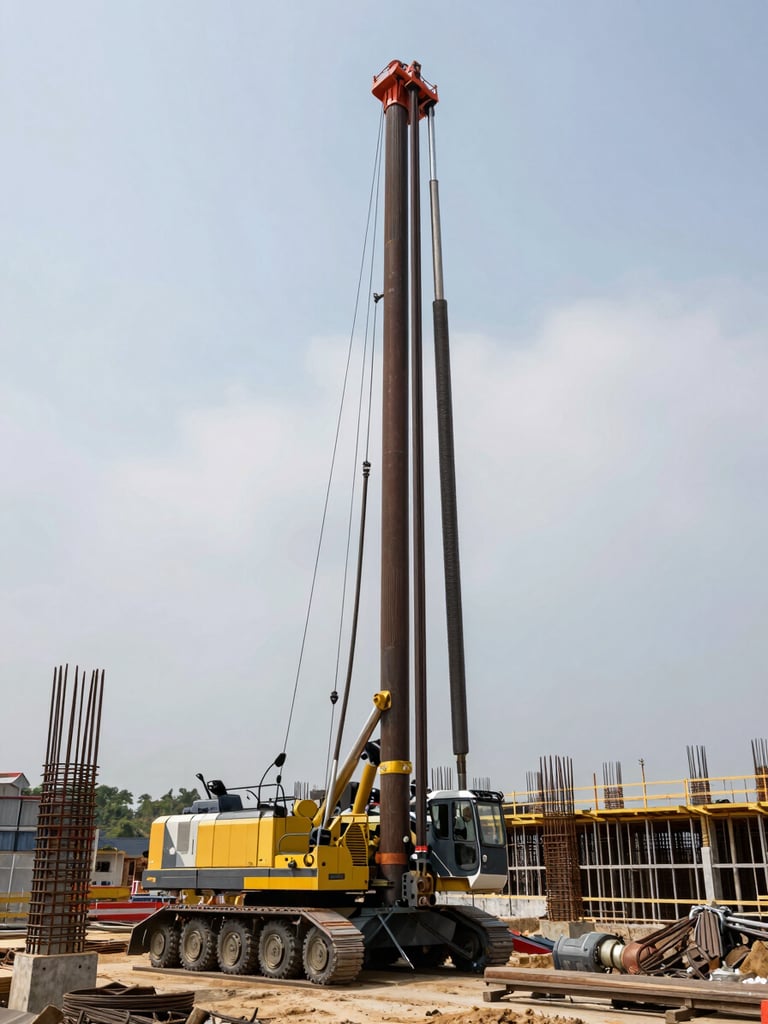
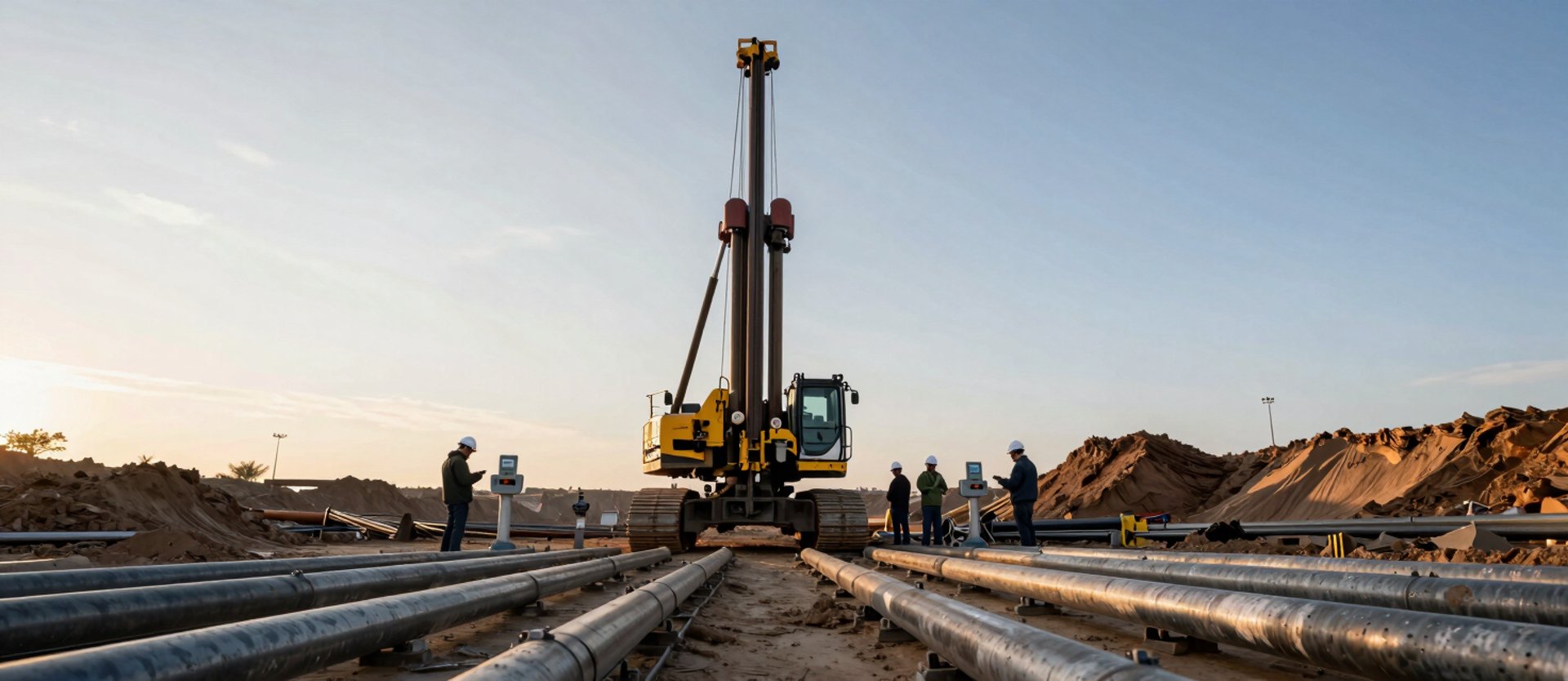
Tall portrait framing of a large rotary piling rig at full mast height on an active construction site, drill string extended, operator cab visible, surrounding site context showing excavated earth and steel rebar cages staged nearby, overcast daylight, no staging or studio setup
+ Rig Fleet & Capacity

Six rig classes. No forced substitutions.

Rotary drilling rigs, hydraulic impact hammers, vibratory drivers, press-in units, micropile drills, and CFA auger rigs—each maintained on rotation and matched to the specific soil and load profile before mobilization.

Bore depths to 45 m. Pile diameters from 100 mm micropile to 1500 mm large-diameter bored. Torque output up to 280 kNm. Crew-operated instrumentation logs real-time set and grout return at the collar.

All rigs are company-owned. No hired-in equipment on critical path operations—schedule certainty depends on it.

Commercial towers, mixed-use podiums, industrial warehouses, transportation infrastructure, marine and waterfront structures, energy facilities, and seismic retrofit on existing buildings—each with documented soil conditions and load specifications on record.

▸ Sectors Served

From high-rise to waterfront.

Project managers receive a method statement before mobilization: pile type, rig, anticipated soil behavior, and schedule assumptions by layer. No surprises at depth.